
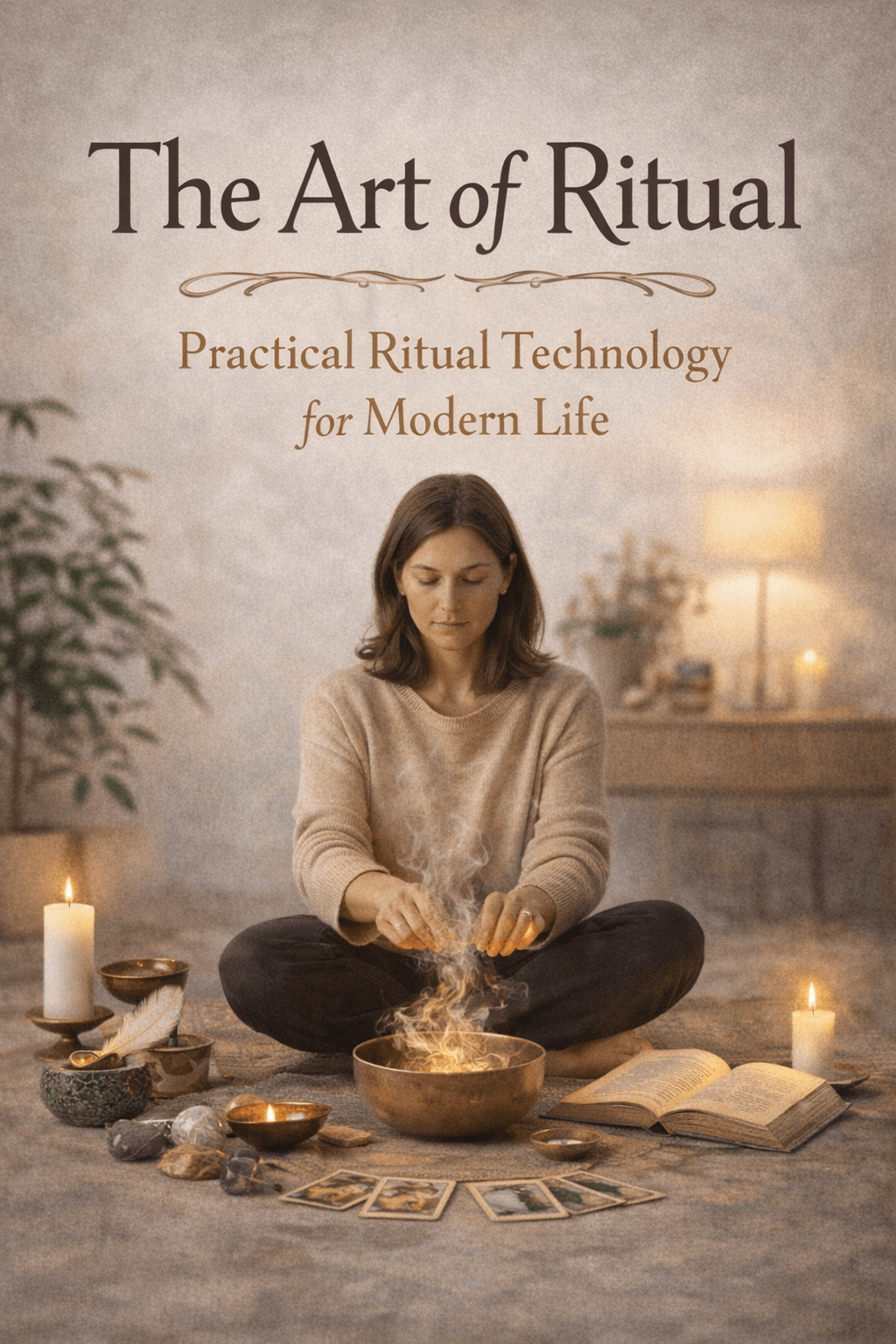
The Art of Ritual: Practical Ritual Technology for Modern Life
Why ritual works (even for skeptics)
Ritual works because it changes what you do with your body, attention, and time. It marks: “This moment matters.”
In modern life, ritual is often reduced to aesthetics. But in mature practice, ritual is functional:
- it regulates the nervous system
- it marks transitions
- it repairs relationship
- it trains responsibility
The 5 ingredients of effective ritual
1) Threshold
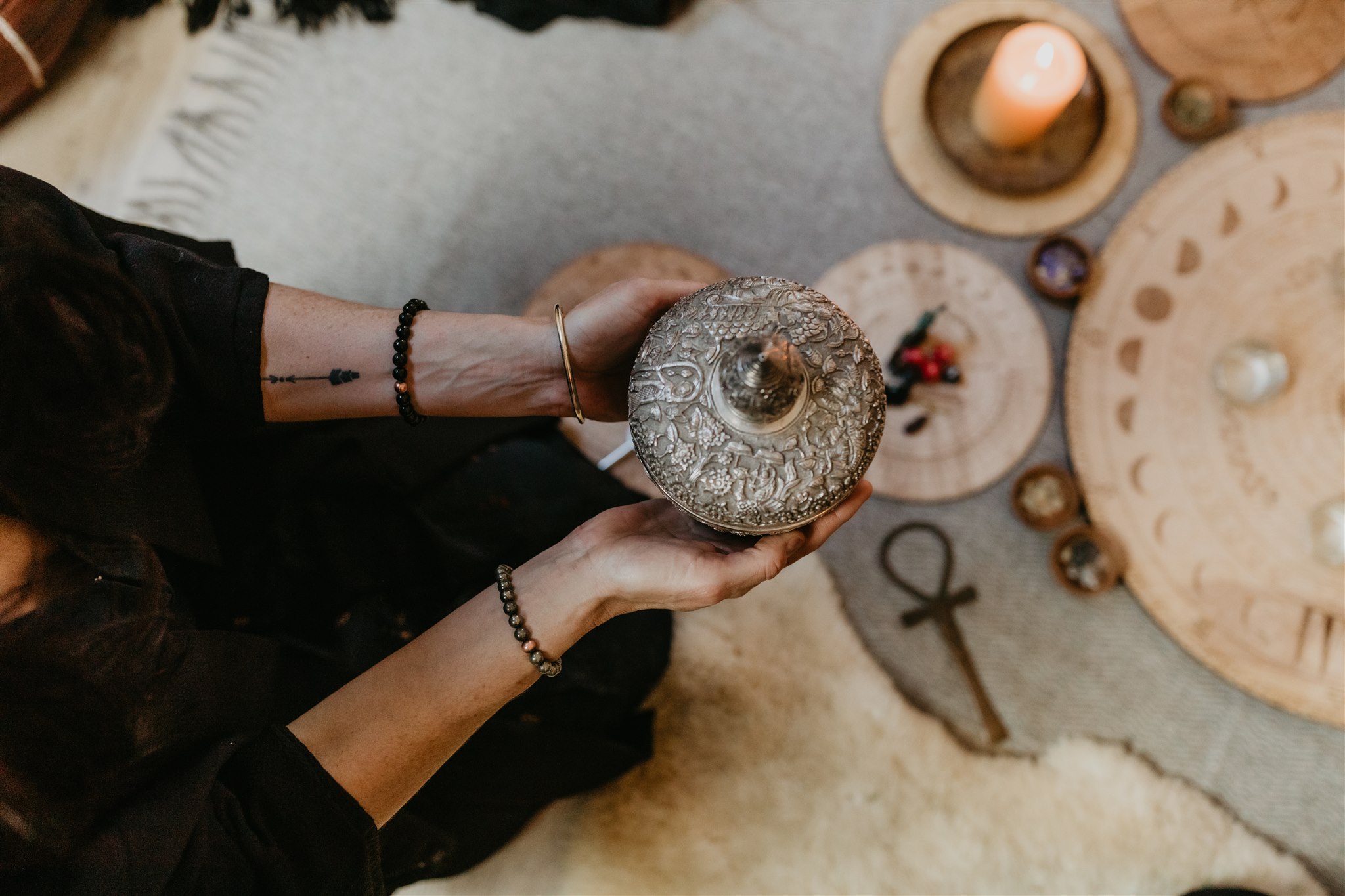
A clear entry into intentional time (a candle, a bell, three breaths).
2) Intention
A sentence that orients the work (“This is for repair.” / “This is for clarity.”).
3) Offering
A gesture of reciprocity (water, gratitude, service).
4) Structured action
A repeatable act (writing a vow, speaking names, walking a boundary).
5) Closing
A clean end (grounding, extinguishing the candle, naming completion).
Ritual vs. performance
Performance asks: “How does this look?” Ritual asks: “What does this do?”
A useful rule: if the ritual cannot be summarized as a clear behavioral change, it likely hasn’t completed.
A ritual design canvas (use this for any ritual)
- Purpose: what is this ritual for?
- Container: where/when, how long, who is present?
- Consent: what do participants agree to (and what can they opt out of)?
- Actions: what will we do, in what order?
- Integration: what happens after—what do we carry into life?
If you are facilitating for others, trauma‑informed pacing and consent matter. A helpful reference for safety principles is SAMHSA: Trauma-Informed Approach (Concept & Guidance).
A 20-minute ritual for clarity (simple and repeatable)
Materials: candle, water, notebook.
1) Open (2 min): light the candle; three breaths. 2) Name purpose (1 min): “This ritual is for clarity.” 3) Offer water (1 min): gratitude for life’s continuity. 4) Write the question (3 min): “What do I need to understand before I act?” 5) One symbol (5 min): draw one card/symbol; record observation before interpretation. 6) One action (5 min): “Within 48 hours, I will…” 7) Close (3 min): extinguish candle; drink water; return to daily life.
Common mistakes that weaken ritual
- Too many actions (complexity hides avoidance)
- No clear closing (people leave ungrounded)
- No integration (insight stays abstract)
- Over-reliance on intensity (strong feelings ≠ completion)
Study ritual with the Academy
If you want to learn ritual as a living craft:
- Start with Classes & Courses for structured learning.
- Deepen initiation through the Oracle Arts Apprenticeship.
- For in‑person temple culture and embodied practice, visit Studio Omari.
by The Acedemy of Oracle Arts