
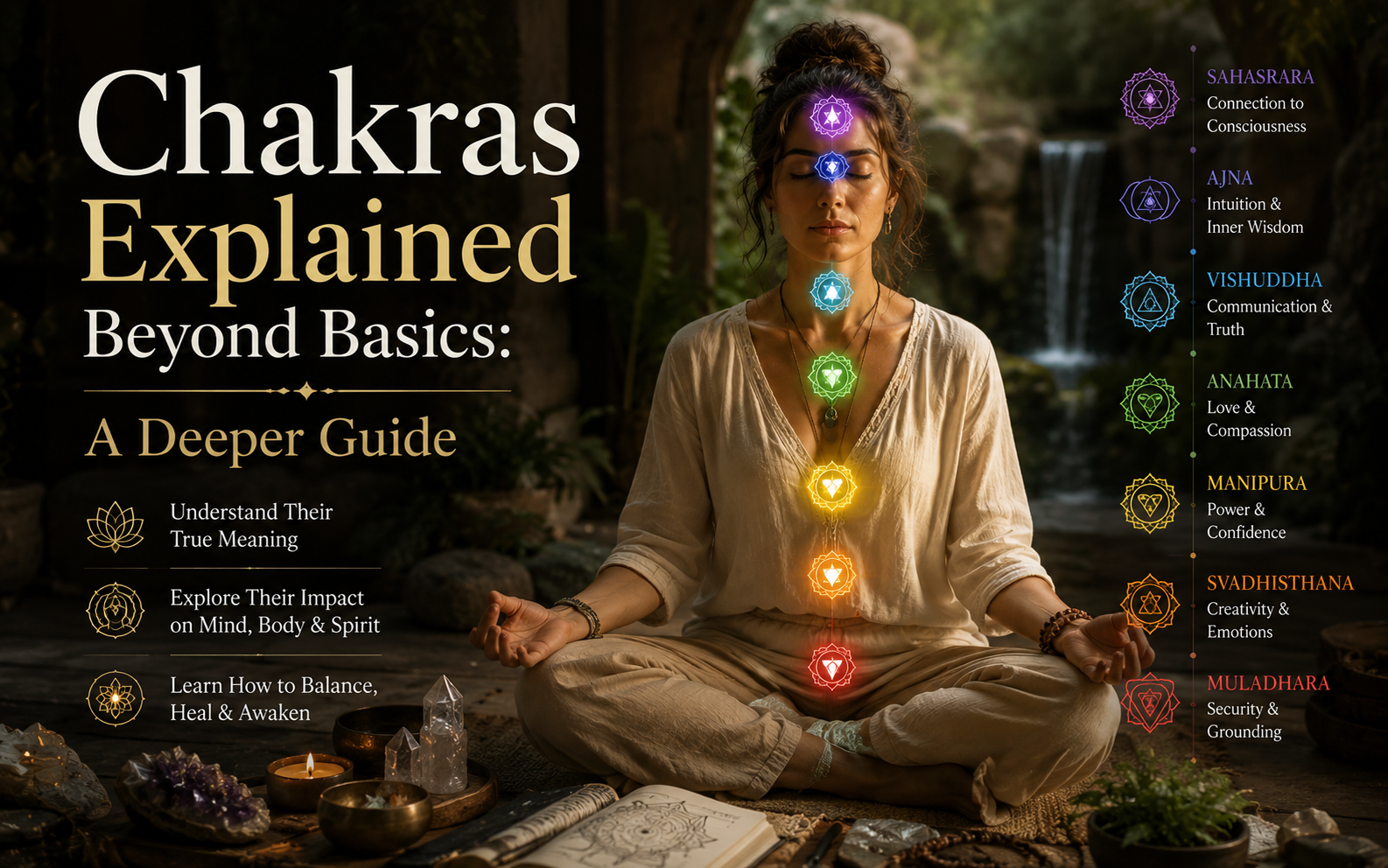
Chakras Explained Beyond Basics: A Deeper Guide
Most chakra guides give you the same surface info: seven centers, seven colors, seven foods. There is more. The chakra system is from old Indian Tantric and yogic traditions. It is rich, layered, and far older than the bright posters in modern wellness shops.
Chakras explained beyond basics goes deeper. You will learn the real Sanskrit names, what each chakra actually rules, and how to work with them in a clear, respectful way.
Where the Chakra System Comes From
The chakra system comes from Tantric Hindu and Buddhist texts in India and Tibet. Some texts go back over a thousand years. The system was a mystical map of the subtle body, used by serious yogis as a tool for inner work.
The seven-chakra system most Westerners know is a simplification. Some texts describe five centers. Some twelve. Some thirty-two. The seven-chakra version became famous in the West through John Woodroffe’s 1919 book ‘The Serpent Power.’
This does not mean the seven-chakra version is wrong. It means it is one map among many, and not the original.
The Seven Main Chakras
- Muladhara (root) — base of spine. Survival, ground, safety. Element: earth.
- Svadhisthana (sacral) — below navel. Sex, creation, joy. Element: water.
- Manipura (solar plexus) — above navel. Will, power, fire of action. Element: fire.
- Anahata (heart) — center of chest. Love, compassion, balance. Element: air.
- Vishuddha (throat) — throat. Speech, truth, expression. Element: ether.
- Ajna (third eye) — between brows. Sight, intuition, vision. Element: mind.
- Sahasrara (crown) — top of head. Spirit, source, oneness. Element: pure consciousness.
Each chakra has many more layers in classical texts: bija mantra (seed sound), petals, presiding deities, and more. The simple list above is the start, not the end.
What Each Chakra Really Rules
Modern guides often link chakras to colors, foods, and physical organs. The classical view is more about psychological and spiritual qualities.
- Muladhara is about being on the earth. Survival, body, ground.
- Svadhisthana is about flow. Feeling, sex, creativity, water-like motion.
- Manipura is about power. The fire of action, the will to do things.
- Anahata is about love. The hinge between lower (animal) and upper (spirit) chakras.
- Vishuddha is about truth. The link between thought and the world (speech).
- Ajna is about insight. The capacity to see beyond the ordinary.
- Sahasrara is about union. The chakra of full liberation, beyond the personal self.
Common Chakra Myths
Some popular ideas about chakras are not quite right.
- Myth: ‘Chakras are spinning wheels in the body.’ Classical texts describe them as petals or lotuses, not wheels. The ‘wheel’ image is a Western simplification.
- Myth: ‘Each chakra has its own color.’ The chakra-color rainbow is a 1970s addition by Christopher Hills. Classical texts describe other colors.
- Myth: ‘You should always open all your chakras as wide as possible.’ Classical practice is about balance and right flow, not maximum opening.
- Myth: ‘Chakras can be permanently blocked.’ Classical texts describe shifting flows, not permanent blocks.
These myths do not make modern chakra work useless. They just mean you should know what is old and what is new.
If you wish to study a real lineage, our Apprenticeship offers careful, respectful work.
How to Work With the Chakras
A simple weekly practice:
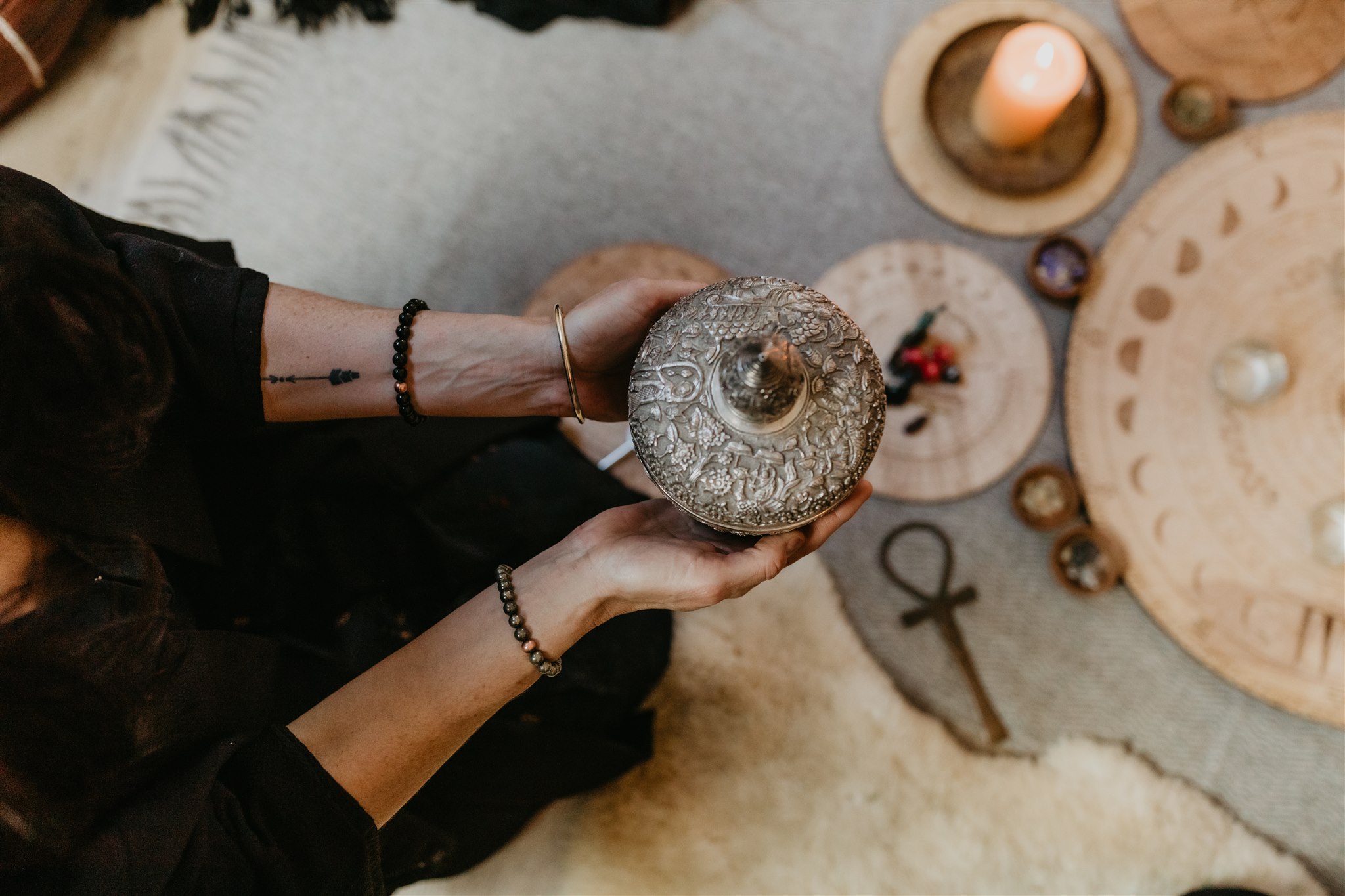
- Sit at your altar.
- Bring attention to one chakra a week, starting at the root.
- Place your hand on the spot. Breathe into it. Notice what is there.
- Speak the Sanskrit name aloud. Let your body learn it.
- Journal what comes up.
After seven weeks, you will have done a full pass. Begin again from the root.
This slow approach gives the body time to learn each center.
Chakras and Daily Life
Use the chakras to read your daily struggles.
- Money troubles — root work.
- Sex or creative blocks — sacral work.
- Lack of will or follow-through — solar plexus work.
- Relationship grief — heart work.
- Trouble speaking up — throat work.
- Brain fog or no clarity — third eye work.
- Feeling cut off from spirit — crown work.
This is a quick read. Real work goes deeper. But the map can point you to the right area to focus on.
Cultural Respect
The chakra system is from living Indian traditions. When you use it, do so with respect.
- Learn the Sanskrit names. Use them sometimes.
- Read at least one book by an Indian teacher (Sri Aurobindo, Swami Satyananda, Anodea Judith’s translations).
- Skip products that mash chakras with random crystal claims.
- If you teach chakras, name your sources.
Respectful use deepens your own practice. It also keeps the wisdom alive in the right way.
Going Deeper
After the basics, study the deeper layers:
- The petals on each chakra and what they mean.
- The bija mantras and their use in chant.
- The deities of each chakra and what they teach.
- The kundalini current and its role in waking the chakras.
- The relationship to nadis (subtle energy channels).
This is the work of years, not weeks. Find a teacher in a real tradition if you want to go this far.
For more on body-based wisdom, see our post on Earth Wisdom in the City.
Final Thoughts
Chakras explained beyond basics is a deep, living tradition. Treat it as such. The seven-center map is a doorway. Walk through it slowly, with care for the source. The reward is a body that holds you and a soul that breathes through every center.
If you wish to study energy work in lineage, our Apprenticeship is a strong path.
Frequently Asked Questions
Are there really only seven chakras?
No. Different texts list different numbers, from five to thirty-two. The seven-chakra version is one common map, made famous in the West in the early 1900s.
Do chakras have colors?
The seven-color rainbow is a recent (1970s) addition. Classical texts describe other colors. The colors can still be a useful tool, but they are not original.
Can chakras be blocked?
The classical view is that flow can be uneven, not that chakras are permanently blocked. Stuck flow can be loosened with breath, meditation, and movement.
by The Acedemy of Oracle Arts