
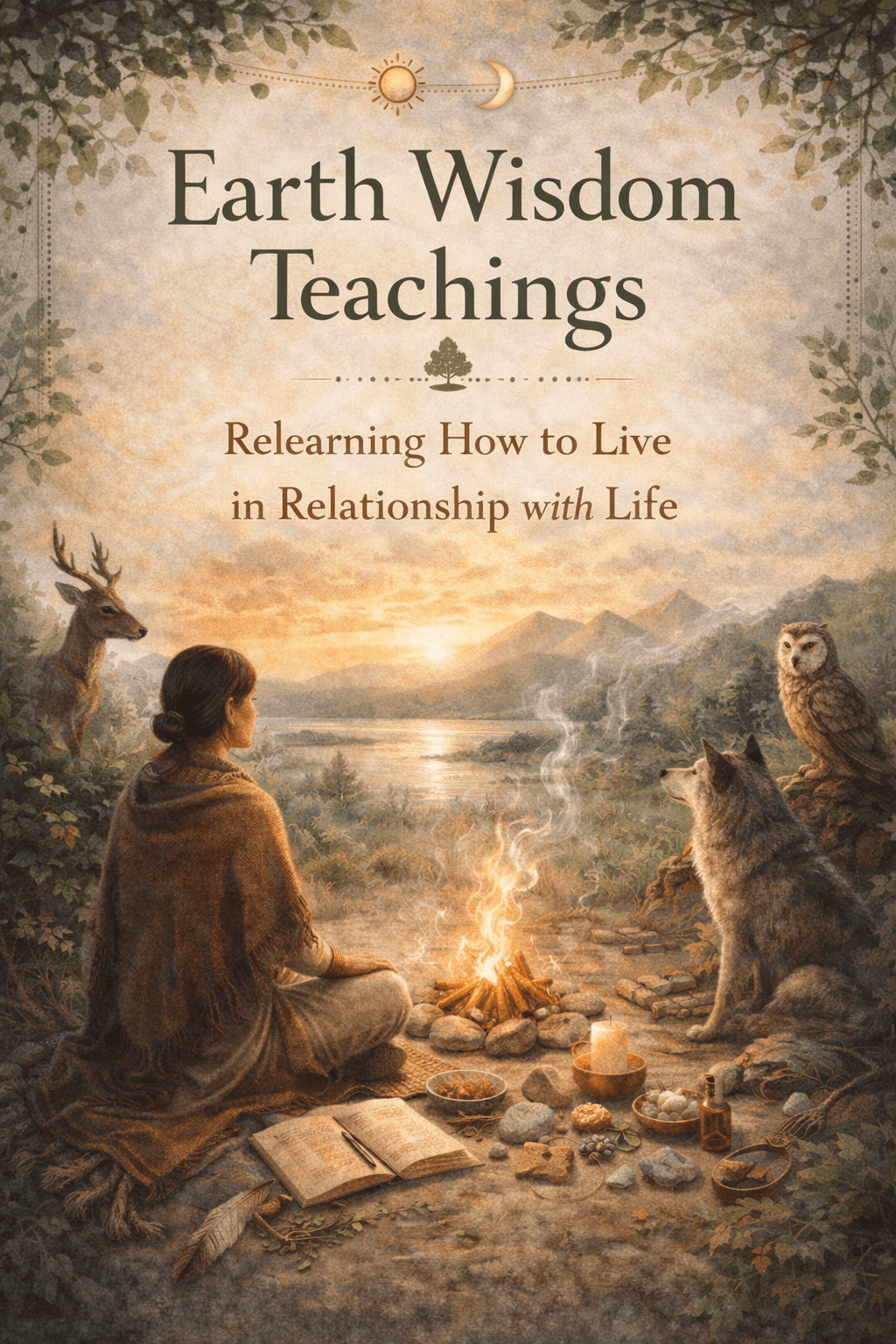
Earth Wisdom Teachings: Relearning How to Live in Relationship with Life
Earth wisdom is not an aesthetic—it’s responsibility
Earth wisdom is often marketed as “nature vibes.” But mature earth wisdom asks harder questions:
- What do you take from your place—and what do you give back?
- What rhythms are you ignoring?
- What relationships (human and more-than-human) need repair?
The core ethic: reciprocity
Reciprocity is the practice of balancing taking with giving. This can include:
- tending land (cleanup, planting, care)
- offering water or gratitude
- supporting local ecological initiatives
If you want a broad environmental stewardship lens, explore resources from UNEP: United Nations Environment Programme.
A local, non-appropriative way to begin
You don’t need to borrow ceremonies from cultures you’re not part of. Start local:
- learn the seasons where you actually live
- learn what grows and migrates there
- practice simple offerings that do not imitate closed traditions
If you’re exploring land acknowledgment, do it with action. This guide is a practical starting point: Native Governance Center: Land Acknowledgement Guide.
A 7-day land attunement practice (15 minutes/day)
Day 1: choose one place you will return to (park, tree, corner, river). Day 2: observe light and weather; record without interpretation. Day 3: observe sound and movement; record. Day 4: notice what is growing and what is decaying; record. Day 5: offer reciprocity (water, cleanup, care). Day 6: ask one question: “What is this place teaching me about limits?” Day 7: integrate: “How will my choices change this week because of this relationship?”
Earth wisdom and community
Earth wisdom is not only personal. It asks how communities gather, share, and repair. If you are holding groups, earth wisdom strengthens:
- pacing
- consent
- sustainable rhythm
- humility
Study pathways with the Academy
To deepen earth wisdom with structure and ethics:
- Explore earth wisdom offerings in Classes & Courses.
- Build steady practice through Self-Study Courses.
- For embodied learning and community temple culture, visit Studio Omari.
- For immersion and pilgrimage containers, explore Journeys & Pilgrimages.
by The Acedemy of Oracle Arts