
How to Awaken Your Third Eye Safely: Discernment, Not Hype
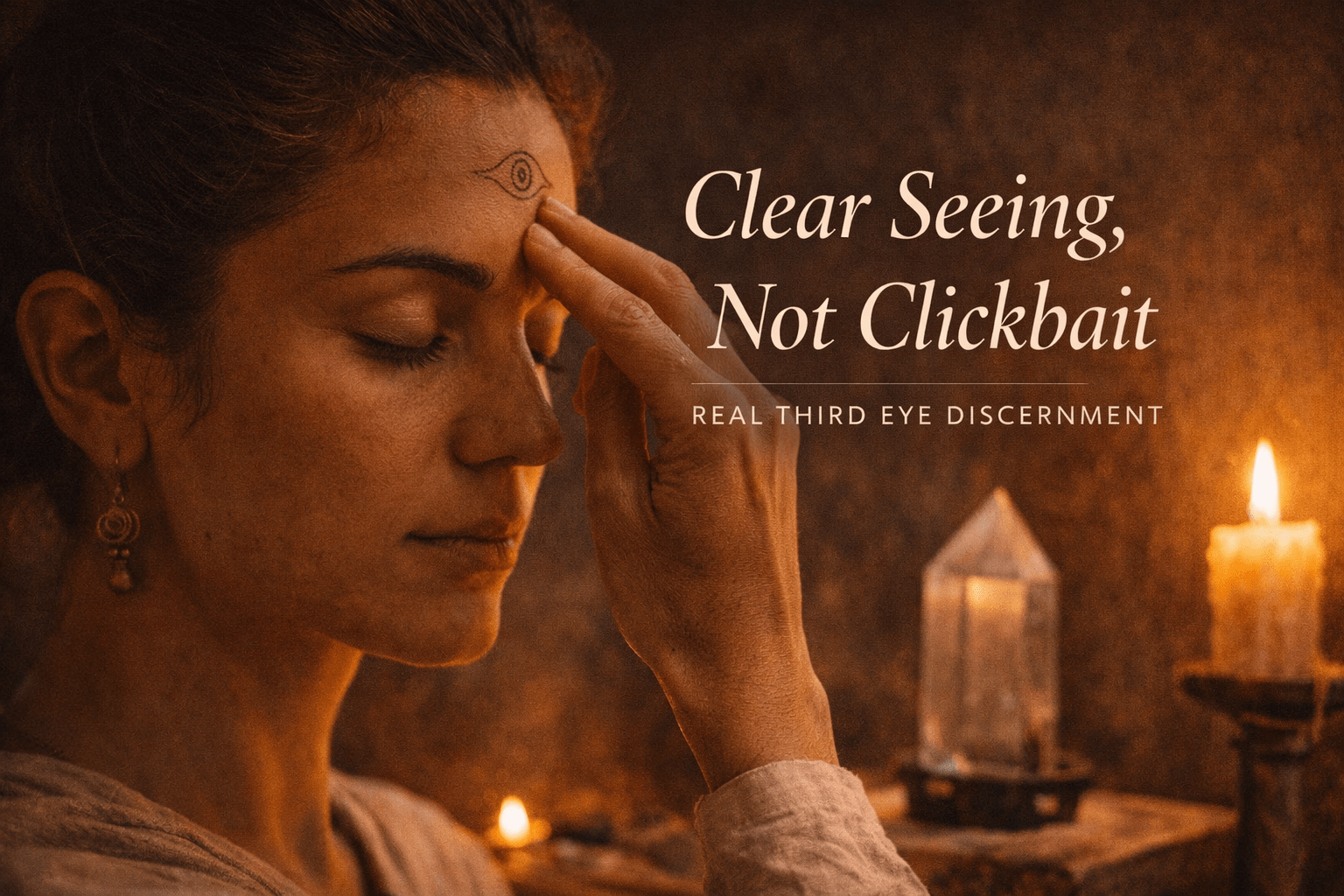
“Third eye awakening” is often sold like a switch you flip. In real practice, it’s closer to learning to see clearly—without forcing visions, without bypassing your body.
At the Academy of Oracle Arts, we treat practice as a craft: rhythm, ethics, and integration. If you’re new here, you can start with Our Story to understand the Academy’s approach.
Quick answer
This post offers a grounded way to approach the third eye as discernment: attention, intuition, and ethical clarity—supported by practice and pacing.
What you’ll learn in this guide
- A safety-first approach to third eye work as discernment.
- A 7-day practice you can actually sustain.
- Common mistakes that create overwhelm or spiritual bypassing.
What this is (and what it isn’t)
- This is a practical approach to how to awaken third eye focused on discernment and real-world change.
- This is not a promise of instant results, supernatural certainty, or identity-based “spiritual status.”
- If you’re working with high-stakes topics (health, legal, safety), use professional support and keep divination reflective.
The SAFE Approach
If you want a container that makes practice consistent, explore Self-Study Courses or join Classes & Courses for guided study. Use the framework below as your baseline.
- S — Slow down: Less intensity, more consistency.
- A — Anchor in the body: Breath, sensation, and sleep are part of the practice.
- F — Focus the question: Intuition strengthens when inquiry is clean.
- E — Exit and integrate: Always close and return to ordinary life.
A 7-Day Third Eye Practice for Discernment
- Days 1–2: 5 minutes of breath + one question: “What is true right now?” Write one sentence.
- Days 3–4: Add a symbol (card, dream image, or word). Describe it literally before interpreting.
- Days 5–6: Practice “discernment journaling”: list 3 facts, 3 feelings, 3 stories you’re telling yourself.
- Day 7: Review the week. Identify one repeating pattern and one next grounded action.
Safety and pacing notes
- If practices make you feel ungrounded, anxious, or overwhelmed, reduce intensity and prioritize stability.
- Avoid using “third eye” language to replace professional care for mental health or medical concerns.
Common mistakes (and how to avoid them)
- Chasing intensity (visions, sensations) instead of training discernment.
- Skipping grounding: sleep, food, and body regulation.
- Using “intuition” to bypass hard conversations or real data.
- Practicing too long, too fast, without closure or integration.
Continue your study with the Academy of Oracle Arts
- Explore Self-Study Courses for paced, grounded practices you can do without overwhelm.
- If you want a supported container, browse Classes & Courses for trainings that build discernment and ethics.
- When you’re at a crossroads, Private Sessions can help you orient without outsourcing your authority.
- Questions about fit? Reach out via Contact.
by The Acedemy of Oracle Arts