
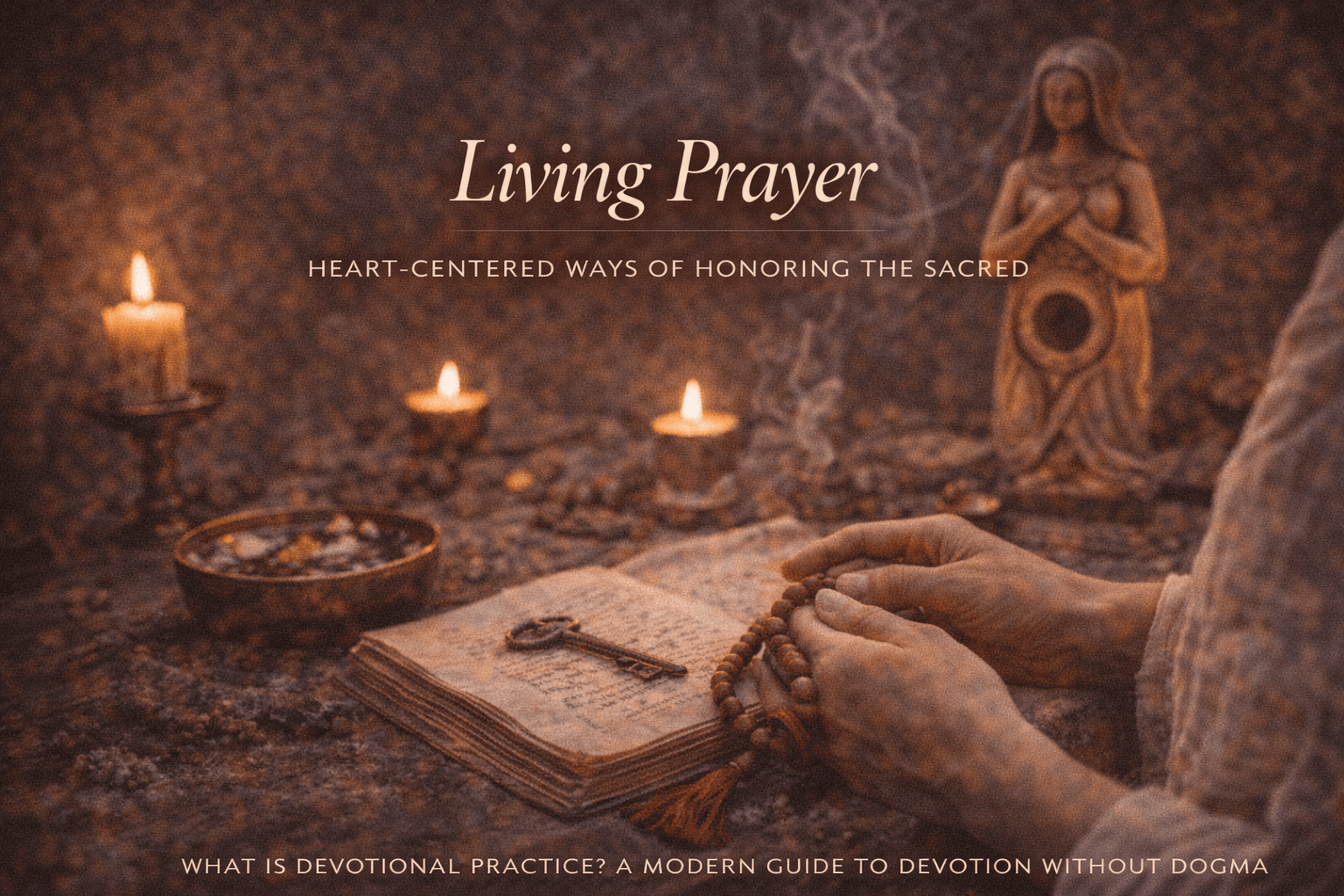
What Is Devotional Practice? A Modern Guide to Devotion Without Dogma
Devotion isn’t hype. It’s the quiet return: again and again, to what matters—especially when you don’t feel like it.
At the Academy of Oracle Arts, we treat practice as a craft: rhythm, ethics, and integration. If you’re new here, you can start with Our Story to understand the Academy’s approach.
Quick answer
This post defines devotional practice in modern terms and gives a simple daily structure you can actually sustain.
What you’ll learn in this guide
- What devotion means without dogma or performative spirituality.
- A 10-minute daily devotion you can sustain.
- How devotion becomes real through reciprocity and action.
What this is (and what it isn’t)
- This is a practical approach to devotional practice focused on discernment and real-world change.
- This is not a promise of instant results, supernatural certainty, or identity-based “spiritual status.”
- If you’re working with high-stakes topics (health, legal, safety), use professional support and keep divination reflective.
The DEVOTE Method
If you want a container that makes practice consistent, explore Self-Study Courses or join Classes & Courses for guided study. Use the framework below as your baseline.
- D — Define what you serve: A value, a lineage, a life principle, the web of life.
- E — Enter daily: A consistent threshold practice (breath, candle, prayer).
- V — Voice truth: One honest sentence; no performance.
- O — Offer reciprocity: A small offering: care, repair, gratitude.
- T — Take one action: Devotion becomes real in behavior.
- E — End cleanly: Close and return to daily life.
The 10-Minute Daily Devotion
- 2 minutes: breath + threshold (candle or quiet).
- 3 minutes: write one honest sentence about what matters today.
- 3 minutes: offering (water, gratitude, repair action).
- 2 minutes: choose one next action and close.
Common mistakes (and how to avoid them)
- Making devotion performative rather than sincere.
- Overcomplicating the practice until you quit.
- Using devotion to avoid ordinary responsibilities.
- Skipping reciprocity—taking inspiration without offering anything back.
Continue your study with the Academy of Oracle Arts
- Build devotional rhythm with Self-Study Courses.
- Deepen within community via Classes & Courses.
- Practice in person at Studio Omari when you want embodied temple culture.
- Explore long-form formation through the Oracle Arts Apprenticeship.
by The Acedemy of Oracle Arts