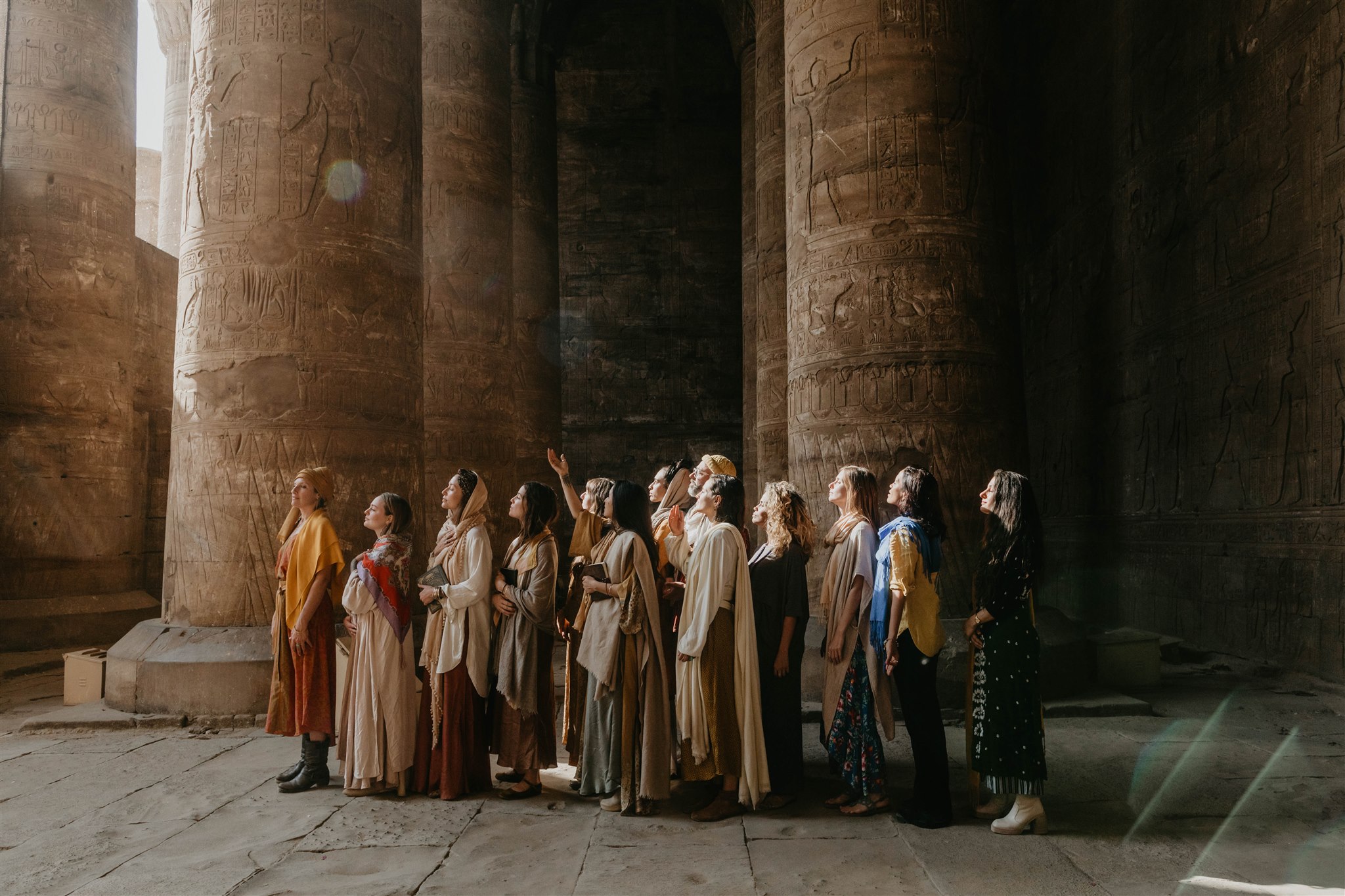

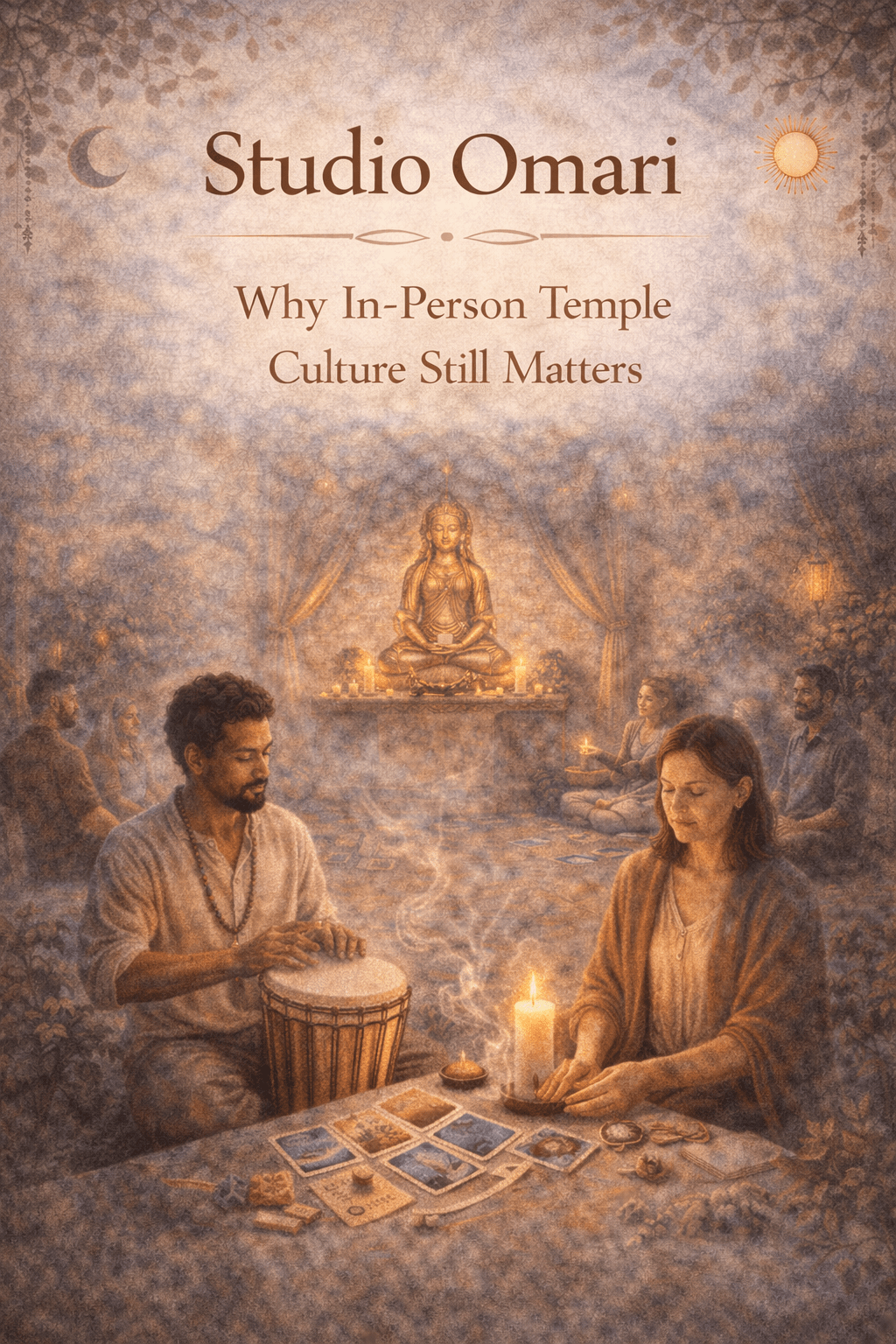
Studio Omari: Why In-Person Temple Culture Still Matters
Why embodiment matters
Online learning can be profound. But some capacities are formed best in person:
- regulated presence
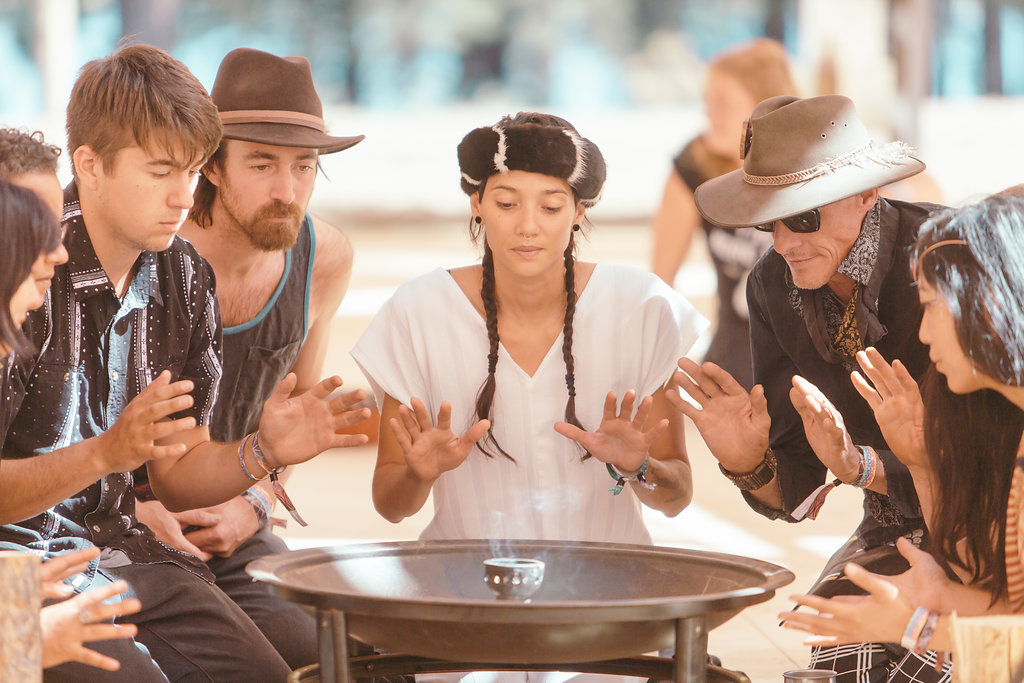
- shared silence
- relational accountability
- ritual timing and pacing
Spaces influence behavior. Environmental psychology and wellbeing research (explored broadly by American Psychological Association) supports the idea that environments shape attention, regulation, and group cohesion.
What “temple culture” looks like in real life
Healthy temple culture is not hierarchy or dogma. It is:
- consistent rhythm (practice that repeats)
- clear openings and closings
- respect for space and people
- consent and boundaries
- integration after intensity
How to prepare for a temple space (simple etiquette)
- arrive early enough to settle
- silence devices and distractions
- participate with humility (listen more than you perform)
- honor opt-outs and boundaries
- help restore the space as part of the ritual
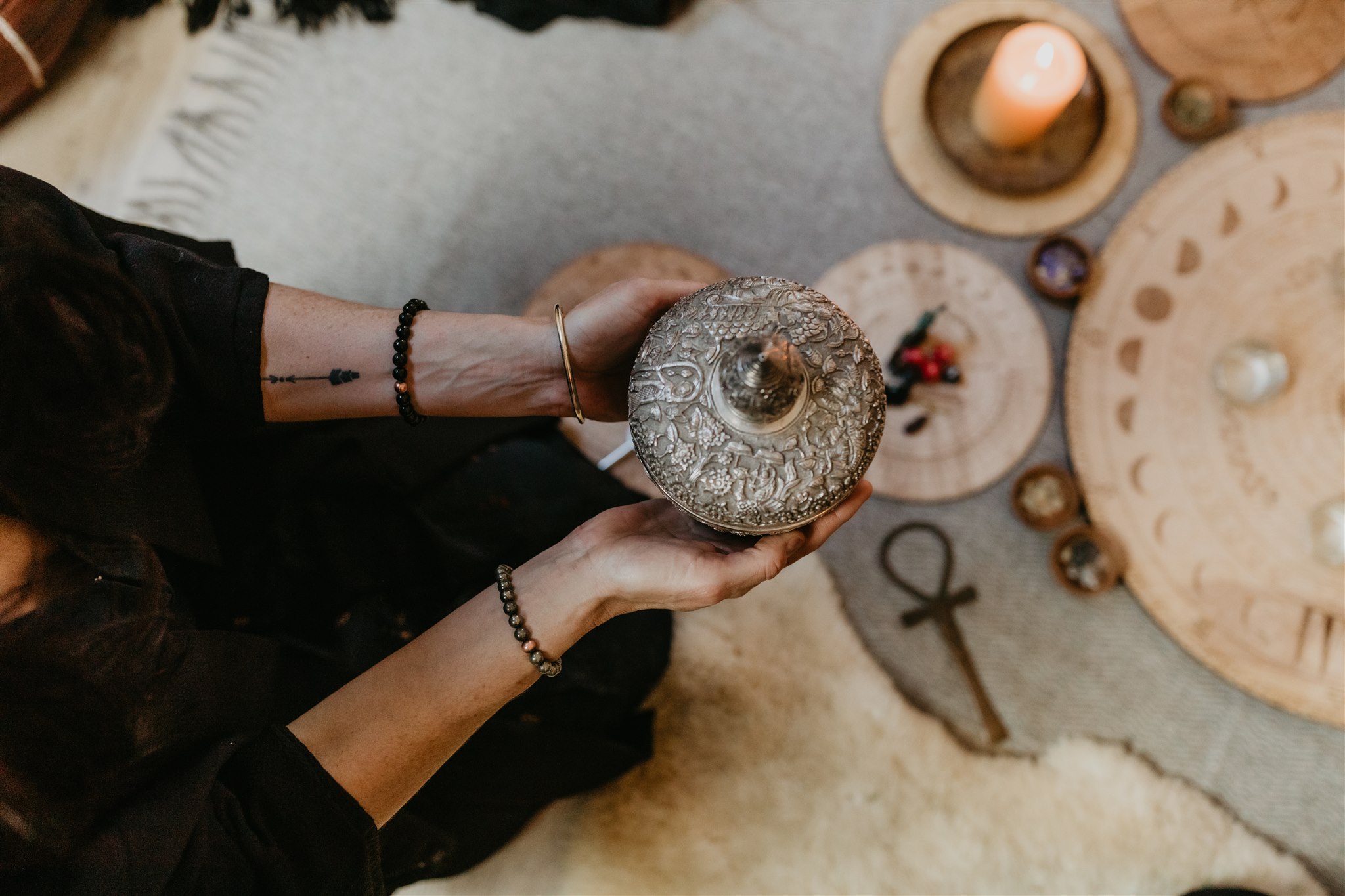
Bring temple culture home (a 10-minute practice)
1) Choose one corner of your home as a practice space. 2) Enter at the same time weekly. 3) Light a candle, name purpose, and do one simple act (breath, prayer, journaling). 4) Close deliberately and return to ordinary life.
Consistency builds more power than novelty.
Explore Studio Omari and the Academy’s pathways
- Learn about the in-person space via Studio Omari.
- Pair embodiment with structured study through Classes & Courses.
- For long-form formation in ritual, sacred sciences, and service, explore the Oracle Arts Apprenticeship.
Questions about visiting or fit? Reach out via Contact.
by The Acedemy of Oracle Arts